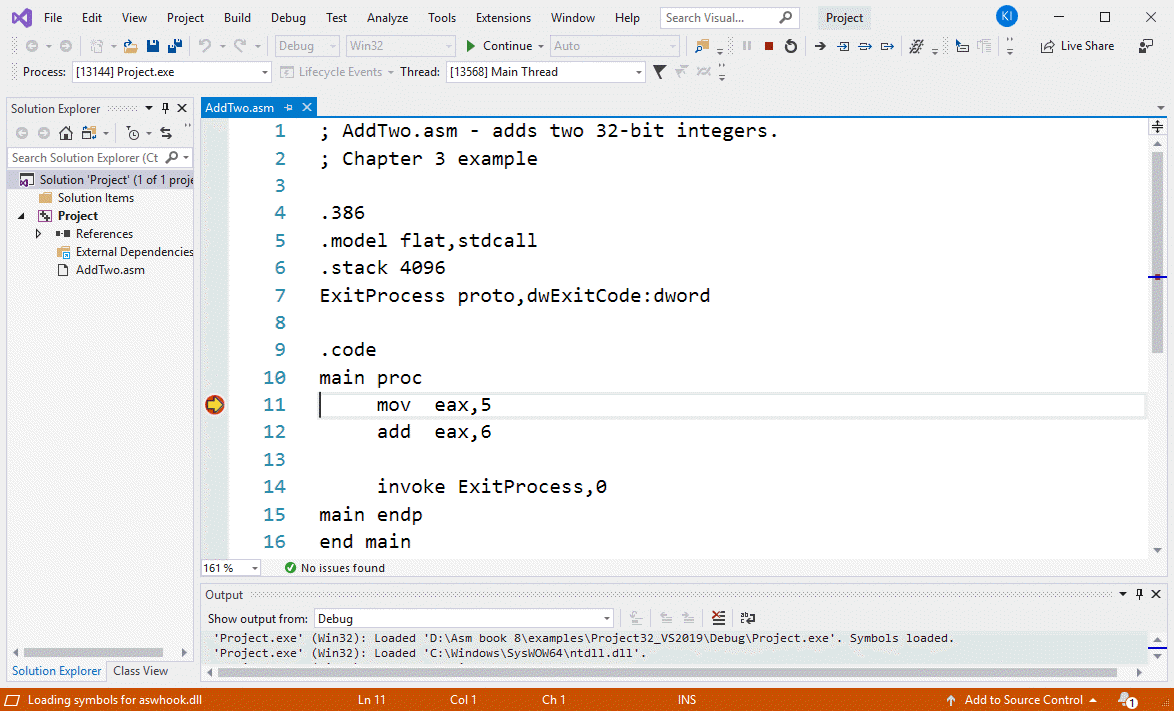
MASM (Microsoft Macro Assembler) is a professional-grade assembler developed by Microsoft that translates x86, x64, and ARM assembly language source code into machine code for Windows and MS-DOS operating systems. It provides precise control over hardware and allows developers to write highly optimized low-level programs. MASM was created in 1981 by Microsoft to provide a tool for developing software on the x86 architecture. x86 has become the dominant architecture for personal computers.
| The name “x86” is derived from the 8086, an early processor released by Intel. x86 CPUs use a complex instruction set computer (CISC) design, allowing them to execute multiple instructions in a single cycle. |
|
It was designed to leverage the full capabilities of Intel processors, enabling developers to write efficient and optimized low-level code. Over the years, MASM evolved with various updates to support new processor features and integrate with Microsoft’s development tools. Strengths of Microsoft Macro Assembler include its powerful macro capabilities, extensive support for x86 and x64 architectures, and integration with Microsoft’s development tools. Weaknesses include its steep learning curve and limited portability to non-Windows platforms. Competitors of MASM are NASM (Netwide Assembler), GAS (GNU Assembler), and FASM (Flat Assembler).
|
“A bank is a place that will lend you money if you can prove that you don’t need it.” ― Bob Hope on banks |